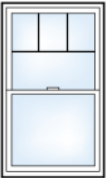
PICK OUT WINDOWS TO MEET YOUR NEEDS: WINDOW MATERIALS
When building a new home, one of the most important decisions you can make is picking out windows that meet your budget, home’s exterior style, and interior spaces needs. There are three areas you need to consider before making your final choices; the first area is window materials.
Window Materials
Most windows are manufactured with either vinyl, aluminum, or fiberglass finishes; however, wood and wood clad windows still have a niche in new home construction.
Wood
If you’re going for natural beauty, then wood is a solid material choice. It is popular among homeowners because it gives the home a traditional, classic appearance, as well as wood windows are a durable natural resource that are environmentally friendly.
Vinyl
Vinyl window frames are composed of PVC (polyvinyl chloride), which is also used in numerous household items, construction, and plumbing products. The quality and durability of vinyl windows have greatly improved over the years, making them a good choice for frames. Although they do not look as nice as wood windows, vinyl windows are cost effective and insulate almost as well as wood windows. Vinyl is the most popular and commonly used window material. These windows are simpler to maintain than wood windows and do not need to be painted.
Fiberglass
Fiberglass windows are composed of reinforced glass fibers and resin which creates a strong durable material that requires little maintenance. Fiberglass can mimic the look of wood windows, providing the home an enhanced look.
Aluminum
For more modern homes, aluminum windows are a good choice; they provide a sleek look and require less maintenance than other materials. Aluminum is lightweight but very strong and can support large expanses of glass. With this material, any home can have a large window space bringing more natural light into the living space.
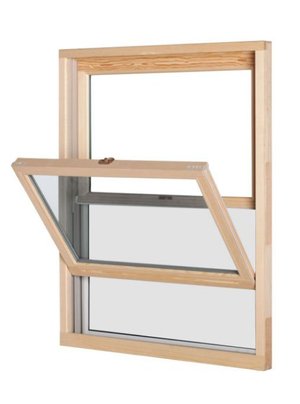
Wood Window
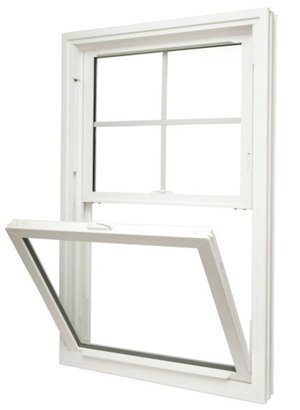
Vinyl Window
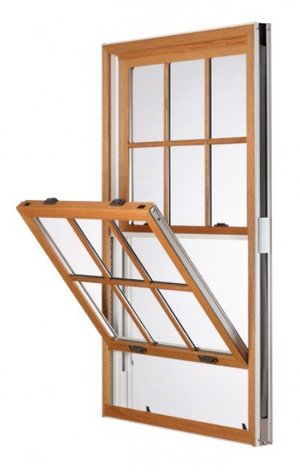
Fiberglass Window
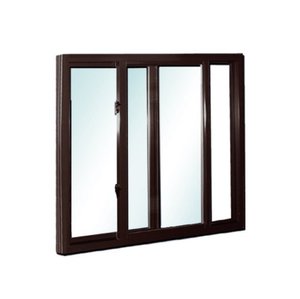
Aluminum Window
Wood Clad
Wood-clad windows provide the appearance of wood without the maintenance. They are solid wood window frames with an exterior covered in aluminum or fiberglass. The two materials are joined together creating a window that combines the best of both materials.
Composite
Made from fully recycled and natural products, composite windows combine wood, metal, and vinyl into a frame. Composite windows provide the best characteristics of different materials into one robust product which offers longevity and sustainability.
PICKING OUT WINDOWS TO MEET YOUR NEEDS: WINDOW TYPES
When building a new home, one of the most important decisions you can make is picking out windows that meet your budget, home’s exterior style, and interior spaces needs. There are three areas you need to consider before making your final choices. In the prior article, window materials were reviewed; the second area for consideration is window types.
Window Types
There are numerous types of windows available for installation in a new home, including double hung, double hung with muntins, single hung, casement, awning, slider, fixed, skylight, bay or bow, and glass block.
Double-Hung Windows
Double-hung windows feature two sashes (frame units surrounding glass panels) that slide up and down within vertical tracks. With today’s double-hung windows, the sashes are counterbalanced by springs hidden in the sidetracks.
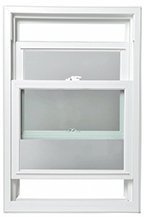
Double-hung Window
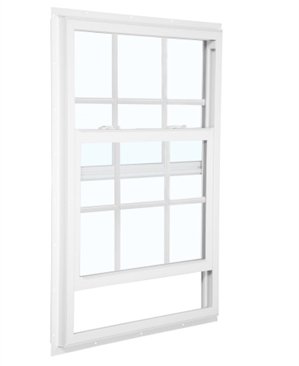
Window with Muntins
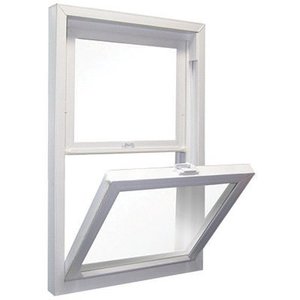
Single-hung Window
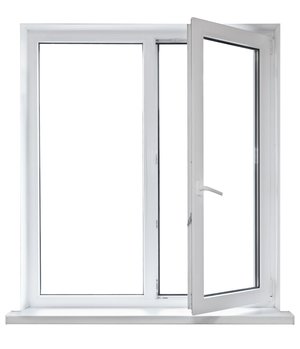
Casement Window
Double-Hung Windows with Muntins
This is a variation of the double-hung window in which the sashes are subdivided into smaller panes within the larger frames, using a grid of horizontal and vertical muntins (supporting strips).
Single-Hung Windows
Single-hung windows are similar to double-hung windows in that they both have two separate, upper and lower sashes. The difference between the two is that the upper sash of a single-hung window is fixed in place, allowing only the lower sash to be operable. One benefit of a single-hung window is because it only opens in one direction, there are fewer points of failure on the window’s locking system.
Casement Windows
Casement windows crank open horizontally on hinges mounted on one side at the top and bottom or on both sides at the top and bottom. Casement windows are very popular, second only to double-hung windows. Windows hinged at the top are referred to as awning windows, and ones hinged at the bottom are called hoppers.
Awning Windows
Awning windows open and close in the same way as casement windows with mechanical cranks; however, awning windows open from the bottom with the top edge fixed in place while the bottom pivots outward and up.
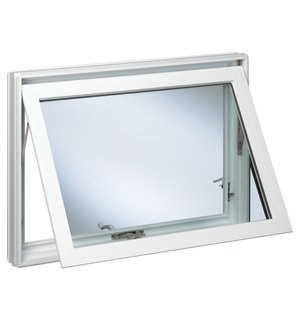
Awning Window
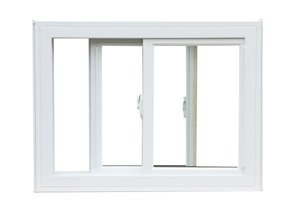
Slider Window
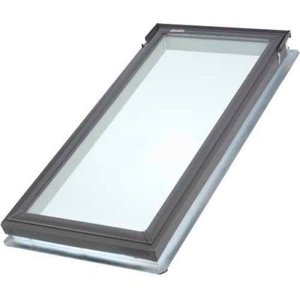
Skylight Window
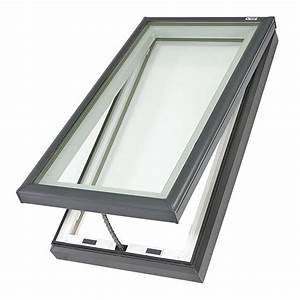
Roof Window
Slider Windows
Slider windows consist of side-by-side windows that slide horizontally along the top and bottom tracks. In some styles, both windows slide, and in other styles, one window is fixed while the other moves side to side.Â
Fixed Windows
A fixed window refers to any window that uses a glass pane fixed within a window frame that does not open or close, for example a picture window. Â
Roof and Skylight Windows
The terms roof window and skylight are sometimes used interchangeably, but a skylight is defined as a fixed window installed in a roofline, while a roof window refers to a window in a roofline that can be opened and closed to provide ventilation.
Bay or Bow Windows
A bay or bow window refers to a combination of windows that together form a unit that extends outward from the wall surface of the house. These windows are called bay when the shape of the extension is square and called bow when the shape is more curved. Bay and bow windows include a fixed center picture window flanked by one or more pairs of double-hung or casement windows on both sides of the center window. In addition, a bay window has three fixed or vented panes, and a bow window usually has four or five fixed or vented panes.
Glass Block Windows
Glass block windows refer to fixed windows made with architectural glass blocks, usually mortared in place. The thick blocks are typically made from semi-opaque glass that allows light to pass through however the window still blocks views.
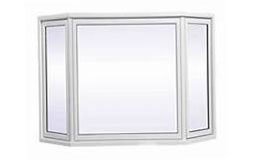
Bow Window
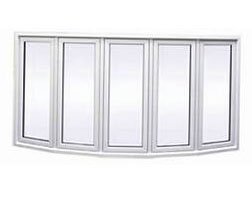
Bow Window
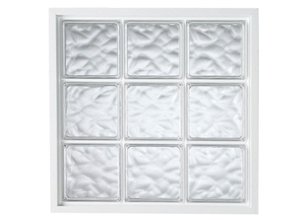
Glass Block Window
PICKING OUT WINDOWS TO MEET YOUR NEEDS: GLASS TYPES AND COATINGS/FILLS
Glass Types and Coatings/Fills
There are several options available when it comes to the glass, coatings, and fillings in your windows.
Single Pane Glass
As the name implies, this is simply one layer of glass in the window. This glass type is no longer manufactured, as double-pane glass has become the industry standard.
Double Pane Glass
Double pane windows have two layers of glass with a sealed air space between them. The airspace helps prevent any heat loss.
Triple Pane Glass
Triple pane windows are the best choice if you live in an extremely cold environment or want a superior sound barrier. These types of windows have the best U-factor values or energy efficiency rating because they usually include Argon gas or Krypton gas.
Low-E Coating for Glass
One common energy performance coating is called “low-Eâ€; it’s a metal coating on one side that is invisible to the eye; the coating reduces the amount of heat transfer.
Argon and Krypton Fill Gases
If you want the best energy performance possible, look for windows that have a Krypton or Argon gas fill. Argon and Krypton are non-toxic, inert gases that are used between double glass panes to increase insulation as well as energy efficiency. The gases are used instead of natural air and are odorless and colorless.
The U Factor
When deciding on new windows, pay close attention to the energy efficiency rating or U-factor value. The lower the U-factor-value, the better the windows are insulated, which provides greater energy efficiency. For example, a single-pane window usually gets a U-factor-value of 1.20; however, most double-pane windows that incorporate gas between the panes usually receive a U-factor-value of .29.
The U Factor
When deciding on new windows, pay close attention to the energy efficiency rating or U-factor value. The lower the U-factor-value, the better the windows are insulated, which provides greater energy efficiency. For example, a single-pane window usually gets a U-factor-value of 1.20; however, most double-pane windows that incorporate gas between the panes usually receive a U-factor-value of .29.
LANGBEEN BUILDERS WINDOW OF CHOICE IS AMERICA’S LEADING BRAND
Langbeen Builders offers its clients PlyGem’s 1500 Vinyl Collection, Single Hung Windows in either a single, twin, or triple window configuration. The 1500 series offers advanced energy-efficient glass packages to help lower heating and cooling bills. In addition, 1500 windows offer:
- A low-profile tilt-latch that allows the bottom sash to tilt inside for easy cleaning
- Durable, dual lift rails for opening and closing the window with ease
- Meeting rail interlocks to tightly close the sash around dual weather stripping and help keep rain and wind out
- A range of exterior colors, including white, beige, clay, black, bronze, and dove grey
- Brickmould, beveled, or flat frame options
- Two grille choices (grilles between glass or simulated divided lite) with five patterns including Colonial, Plaza, Prairie, Diamond, Gothic
- Forced entry-resistant cam locks to enhance security and meet AAMA forced-entry requirements
- A limited lifetime warranty and 20-year glass warranty
As part of the standard building package, Langbeen Builders provides vinyl, single hung windows with the following features:
- Brickmould frame
- White interior and exterior frame color
- Grille between the glass, ¾†flat
- Plaza pattern (4/1)
- Double pane, Low-E glass with Argon (.32 U rating)
However, since not every client has the same design requirements, a client can change any of standard features via a change order that reflects the new item, for example changing the exterior frame color from white to black or the pattern from Plaza to Prairie. No matter what the end window product, PlyGem 1500 windows will keep any home comfortable throughout the seasons and provide easy cleaning and maintenance as well as look great.
4/1 or Plaza Pattern